

humour
I Lived In The Canadian Wilderness For 6 Months. Well, on a Kids’ Camp With Some Heated Cabins, a Semi-Functional Wifi Connection and a Dining Hall That Provided Hot Meals at Regular Intervals But Other Than That It Was Basically Primitive…
I graduated from university in July 2015.
The whole experience was quite disorientating.
For the first time since the age of four, I found myself outside of the academic system that had always provided me with a steady stream of goals and a consistent sense of purpose.
I felt quite lost like Nemo in Finding Nemo or the people in that TV show where the plane crashes and the passengers become stranded on an island.
I often experienced difficulty answering certain questions in job interviews.

I do not remember having identity issues as a child.
Back then, I spent a lot of time in the great outdoors and when I say the ‘great outdoors’, I am referring mainly to my parents’ back garden.
My parents’ back garden featured breath-taking geographical features such as a 2×3 metre pond, a multitude of impressive wildlife specimens in the form of worms and the occasional pigeon and some flowers.
Once I was in the wilderness, it was hard to get me out.
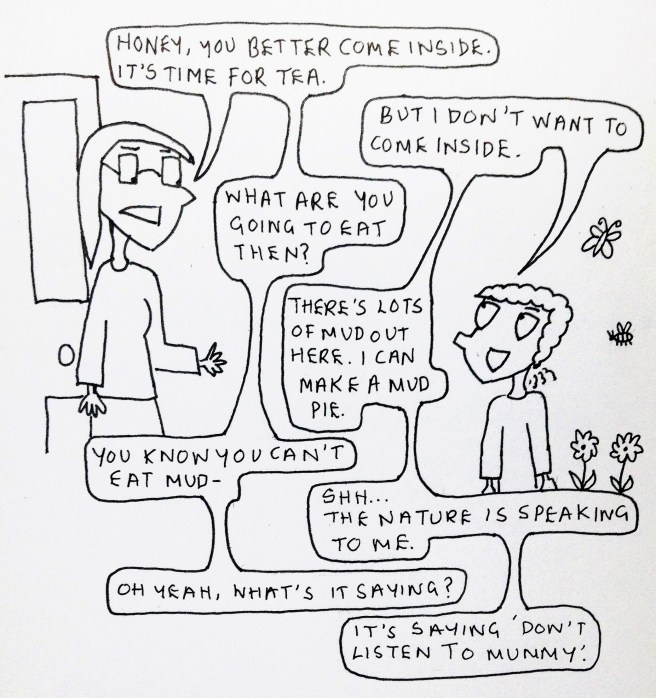
Eight months after graduating, I decided to go and work on an outdoor education camp on the west coast of Canada, in what I guess was an attempt to reconnect with a simpler time when I worried less about establishing myself in the ‘real world’ and more about the important things in life, such as whether my mum would get mad if I used her electric whisk to blend together the ingredients of my mud pie.
Western Canada is a land of great natural beauty.
It looks a lot like that place that they used to film Lord of the Rings, except not exactly like that place because that place isn’t Canada; it’s New Zealand.
However, soon after arriving at camp, I discovered that finding a peaceful moment to contemplate nature is kind of difficult when you spend the majority of your time surrounded by kids.

When you are out on a boat with a group of children it is important to concentrate, not on the complexity of human cognition, but on providing some form entertainment for the kids.
Neglecting to do this will encourage them to find ways of entertaining themselves.
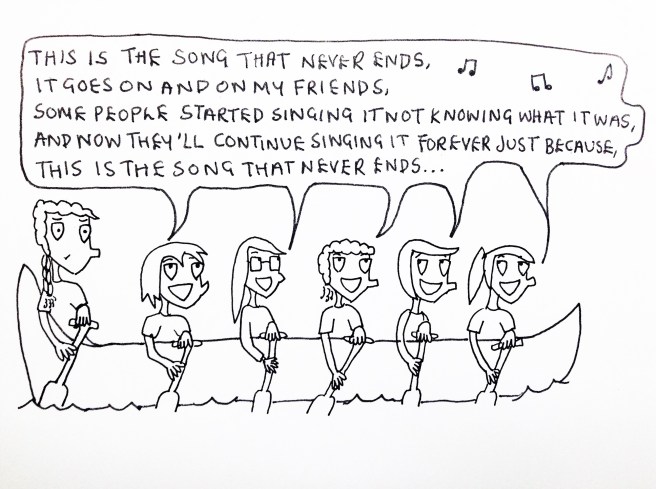

At first, I did genuinely believe that it was going to be okay.
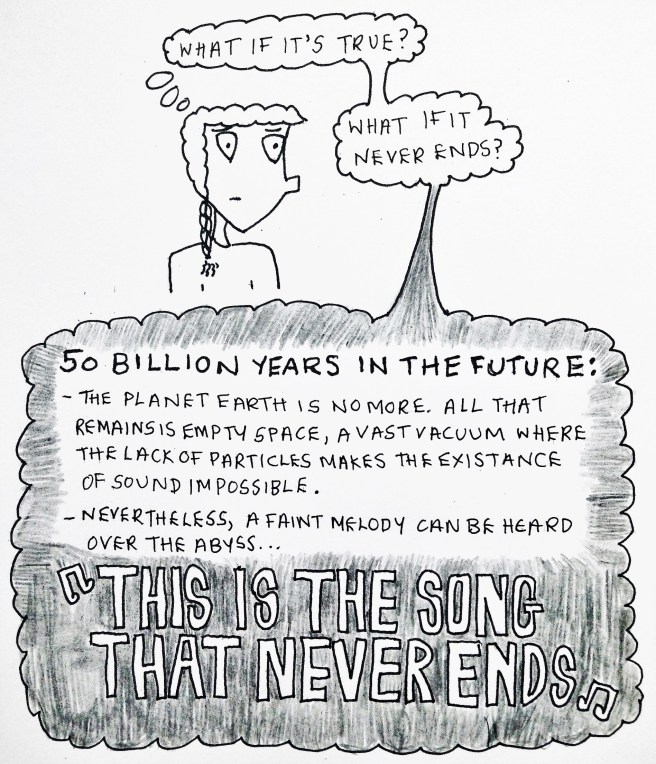
The logical part of my brain was aware of the fact that a group of 11 year old girls didn’t possess the vocal capacity to continue singing until the end of time.
However, as the minutes passed and the singing continued, I started to lose my grip on my sanity and with it my ability to think in a rational manner.


As a camp counsellor, you are required to provide 24 hour supervision for the kids in your care.
This means that you have to sleep in the same building as them which would be fine if it weren’t for the fact that a lot of children don’t understand how to sleep properly.
Some kids, for example, operate under the terrible misconception that the crack of dawn is an acceptable time to be awake.


Children learn at an accelerated rate and as a result have highly imaginative minds.
This heightened curiosity that children possess is an amazing thing.
However, it is significantly less amazing when it manifests itself in a seemingly unstoppable torrent of questions at 4:35am in the morning.

Despite its frustrations, working with children is ultimately a pretty rewarding experience, even if it does entail spending the early hours of the morning explaining how sunscreen works to a 9 year old.
However, during my time at camp, I was not working with kids 100% of the time.
In the spring season, the site was frequently rented out to adult groups for various events, weddings and retreats.
Whilst working with one of these groups, I got talking to a man who told me that stargazing on a regular basis helped him to maintain clarity of thought.
The man in question had dreadlocks and was wearing a ‘Live, Breath, Yoga’ singlet so I decided that he was probably a reliable source of wisdom.
I figured that what he was saying made sense – if you’re searching for a personal lightbulb moment, why not look to nature’s very own lightbulbs to locate it?


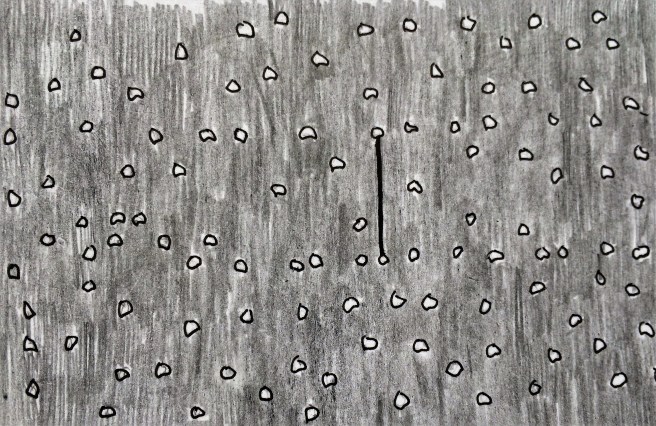
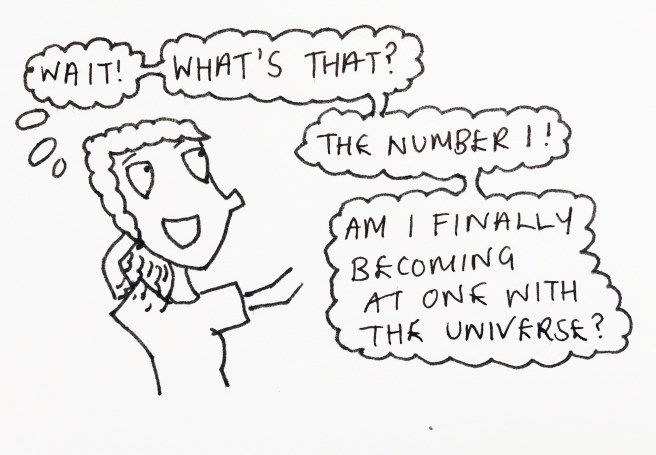
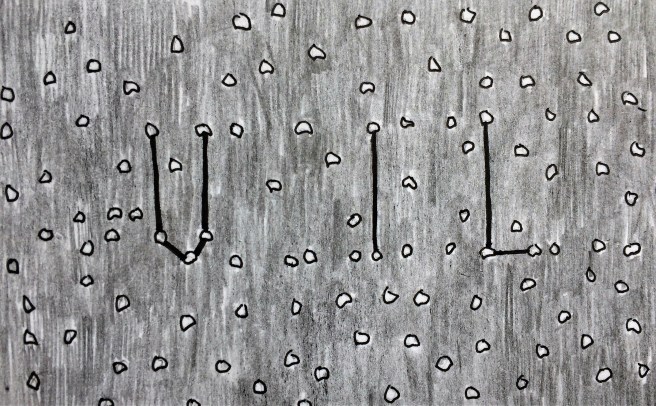


I’m beginning to doubt if staring intensely at a mountain range or the night sky is an effective way to induce a moment of epic self-realisation.
Maybe a solid identity is not something that can be found in a fixed moment because we ourselves are not permanent fixtures.
Our minds are always evolving and the way in which we perceive ourselves and our surroundings is constantly changing.
Maybe the process of reaching self-enlightenment is a bit more like driving down a heavily congested road…

3 Books That I Loved As A Child But Now Find Logically Problematic As An Adult.
One of the great appeals of reading fiction is the idea of escapism.
Books provide us with the opportunity to transcend our everyday lives.
As a child, I had a very intense and vivid imagination.
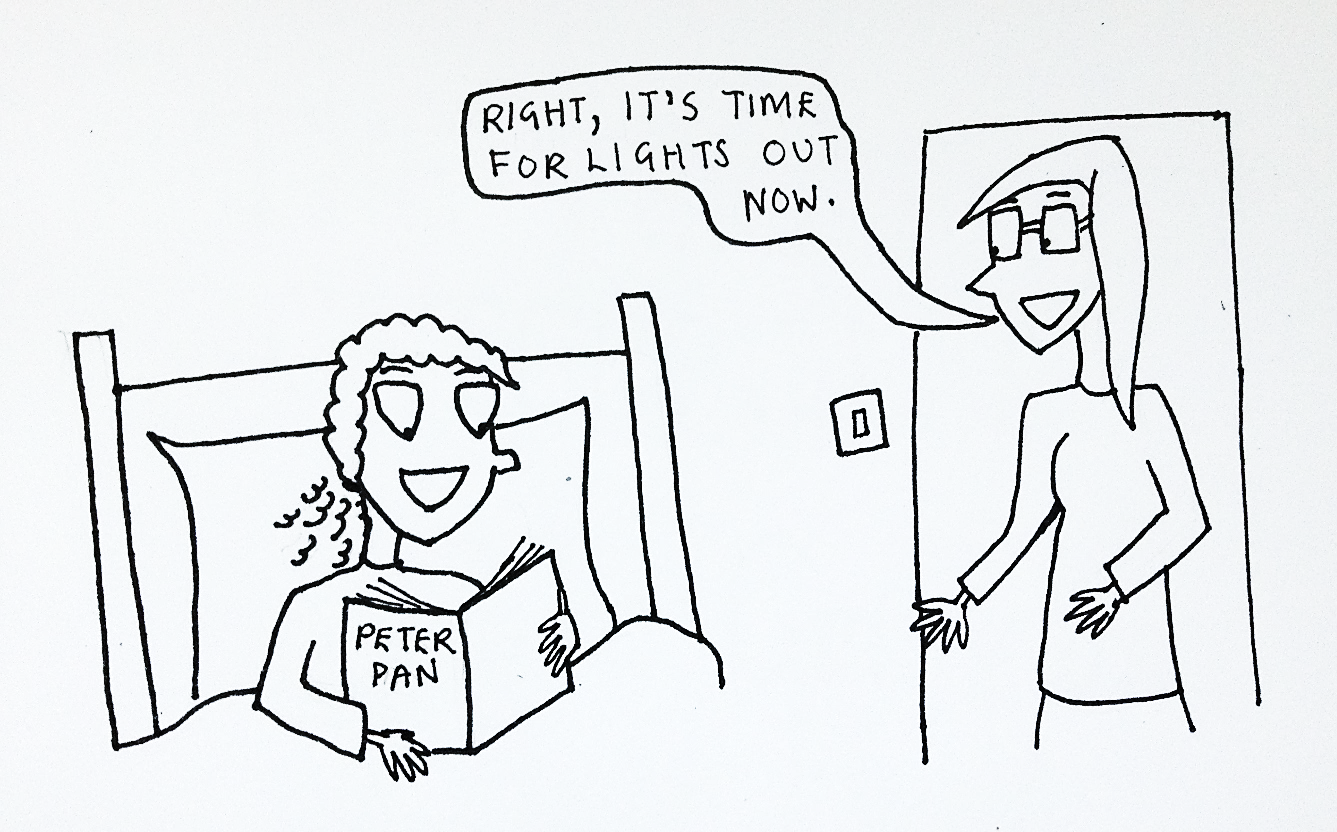
When reading a book, I would often become so immersed in the story that I would begin to confuse the fictional world with reality.

When reading, I would enter into a self-enclosed sphere of imagination in which my immediate surroundings momentarily ceased to exist.
The material world no longer featured as part of my own personal reality and, as a result, the things that my body required in order to function properly became completely irrelevant.



However, as I have grown older, my ability to become completely absorbed in a fictional novel has been somewhat compromised.
I come from a scientific family – my granddad was an engineer, my parents are doctors, one of my brothers is studying marine biology at university and the other one received a prize in Year 2 for ‘The Best Model of a Volcano’.
Therefore, although I like to consider myself a creative and imaginative person, there is a part of my brain that is inclined towards thinking in an analytical and logical manner.
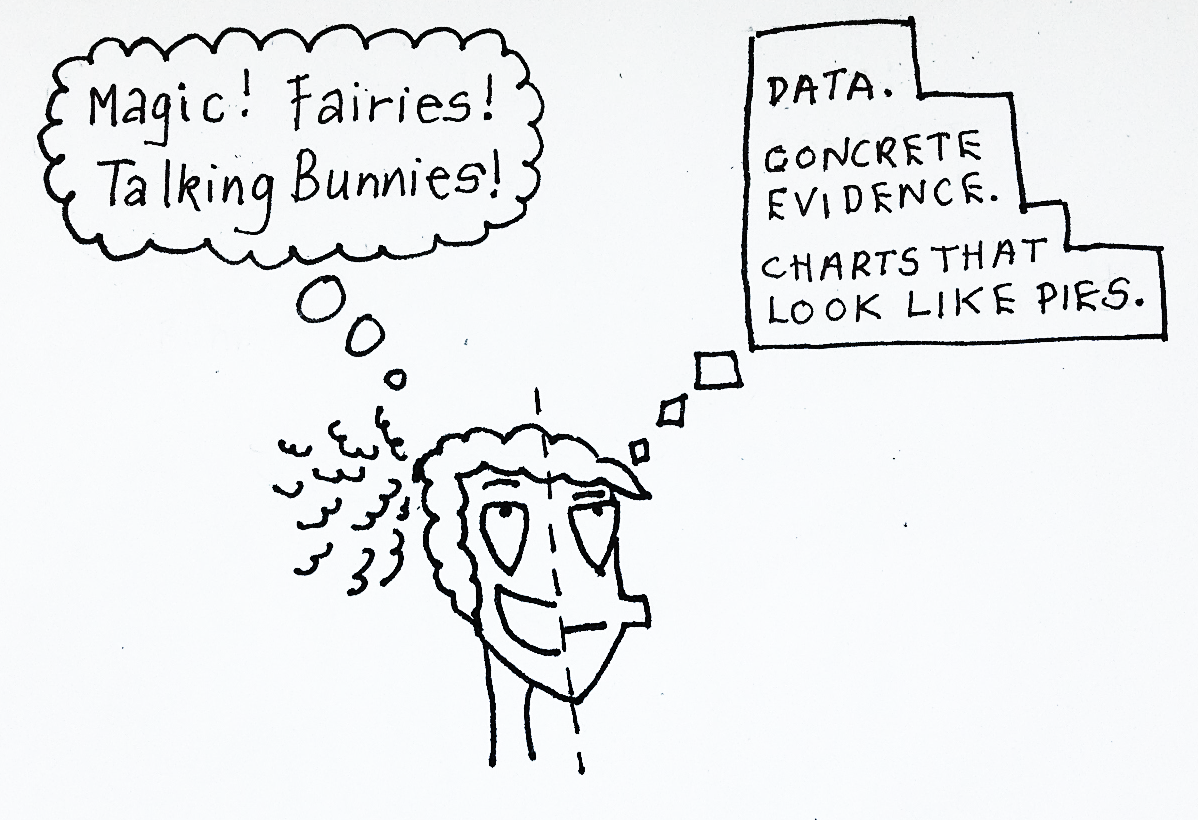
As I have progressed out of childhood and through the teenage phase, I have noticed the logical side of my brain begin to exert increasing levels of dominance over the imaginative side.
I have seen this transition manifest itself most noticeably in the way that I now perceive the books that I used to find so captivating as a child.
1. The Very Hungry Caterpillar
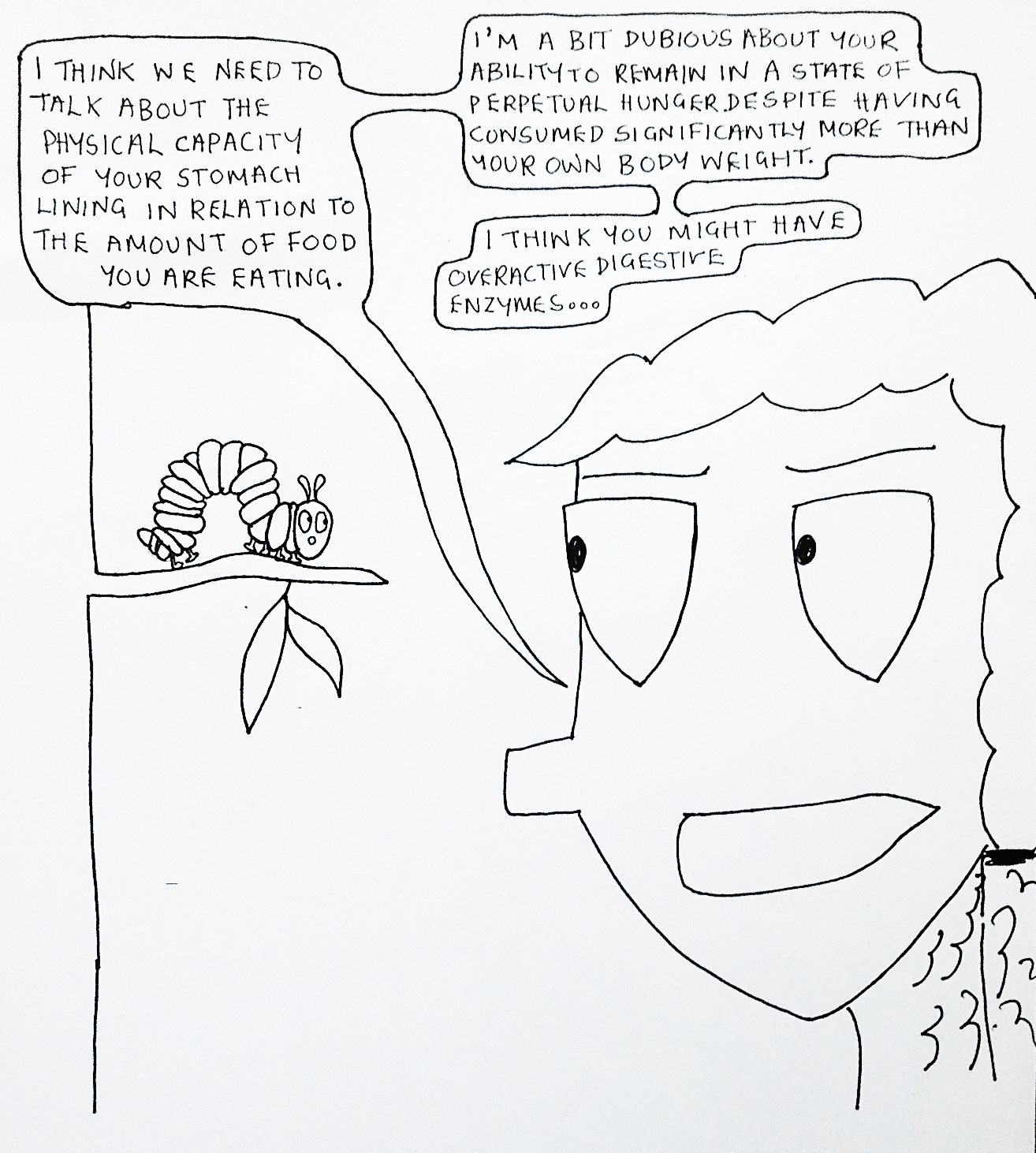
The Very Hungry Caterpillar tells the story of (SPOILER ALERT) a caterpillar that is very hungry.
At the end of the book, the caterpillar metamorphoses into a butterfly.
Before completing this transition, he eats his way through increasing quantities of brightly coloured food items.
By the story’s climax, the caterpillar has consumed over 20 items of food, including an ice cream cone, a cupcake and a slice of Swiss cheese.
This was fascinating to me as a child.

However, as I have grown older and my knowledge of the anatomy of insects has developed, it has become harder for me to get invested in narratives such as The Very Hungry Caterpillar.
2. We’re Going on a Bear Hunt
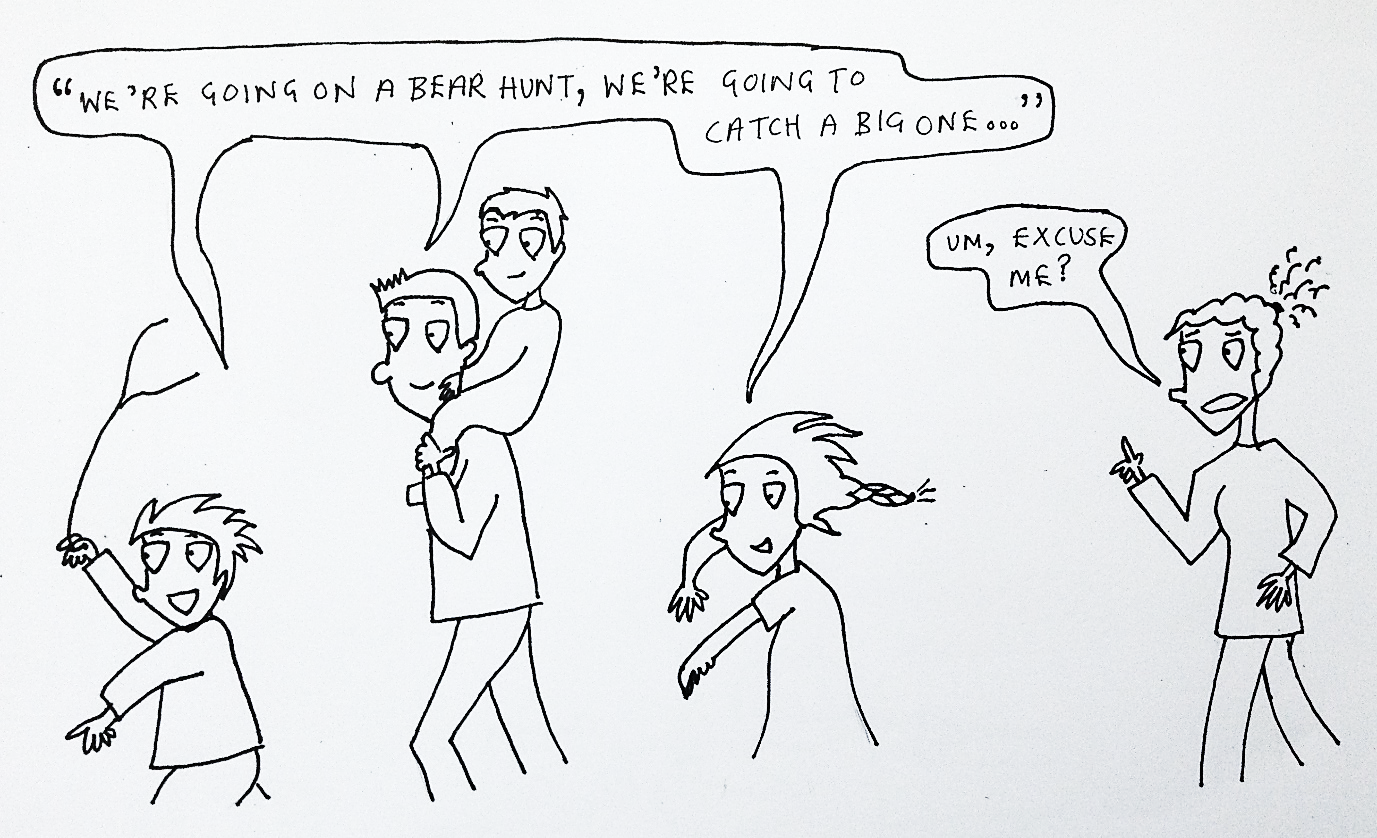
We’re Going on a Bear Hunt details the story of a family who spontaneously decide to go out into the wilderness and search for a bear.
The structure of the book is similar to that of The Very Hungry Caterpillar.
Before locating a bear, the family is forced to traverse various obstacles in the landscape.
As child, I found the wide range of obstacles that the family encountered so completely captivating that I failed to think about the fact that they were actively looking for a bear.
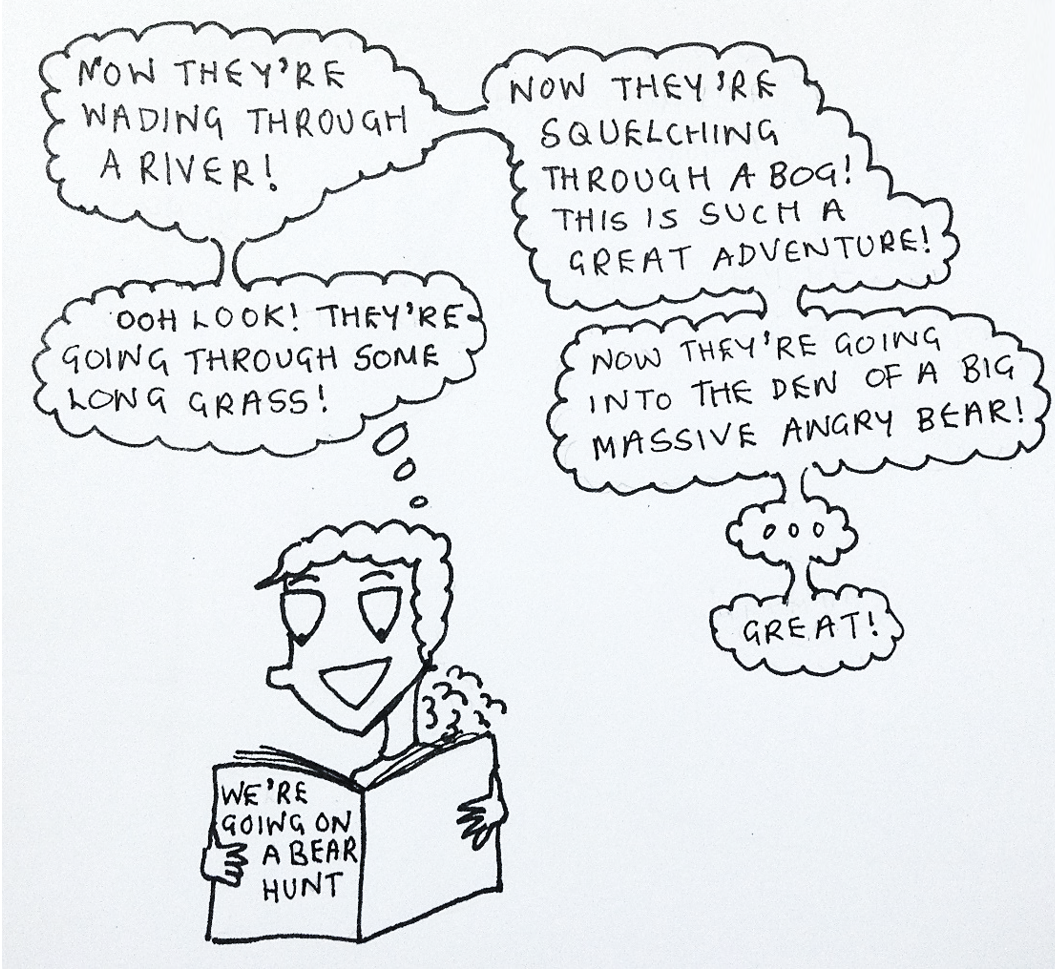
As I have grown up, I have spent some time watching David Attenborough documentaries and other educational films such as The Revenant.
I have therefore acquired a greater awareness of the physical threat that bears can present to humans.
As a result, I have developed a few issues with the basic principle of We’re Going on a Bear Hunt.

3. Harry Potter
Quidditch was always my favourite part of Harry Potter.
Whilst I found all of Harry’s magical adventures fascinating, I was particularly enthralled by the concept of Quidditch.

However, I recently dipped my head back into The Philosopher’s Stone and, whilst reading, I became slightly alarmed at the rate at which Harry Potter learns to fly a broomstick.
Within the space of a one hour Broom Skills lesson, he progresses from barely knowing how to hold the broomstick to driving it at high velocity.
I am aware that Harry is special and Hogwarts is magical but this accelerated rate of learning still seems quite dangerous to me.
I also found myself slightly concerned with Madame Hooch’s conduct within Harry’s first flying lesson, particularly the point at which she leaves a group of 11-year-old children unsupervised with a load of flying equipment that is capable of reaching speeds in excess of 100 mph in order to take Neville Longbottom to the hospital wing.
It occurred to me that Hogwarts should probably run an INSET day before the start of term in order to properly educate its staff in Health and Safety procedures.
Then again, the fact that there was a massive three-headed dog, a massive poisonous snake and a massive ‘whomping’ tree on the premises at various points during Harry’s time at the Hogwarts suggests that Health and Safety potentially wasn’t a prioritised matter on the agenda at any of the school’s board of governors meetings.
If I were a teacher at Hogwarts, I imagine that my flying lessons would be a little less exhilarating than Madame Hooch’s.
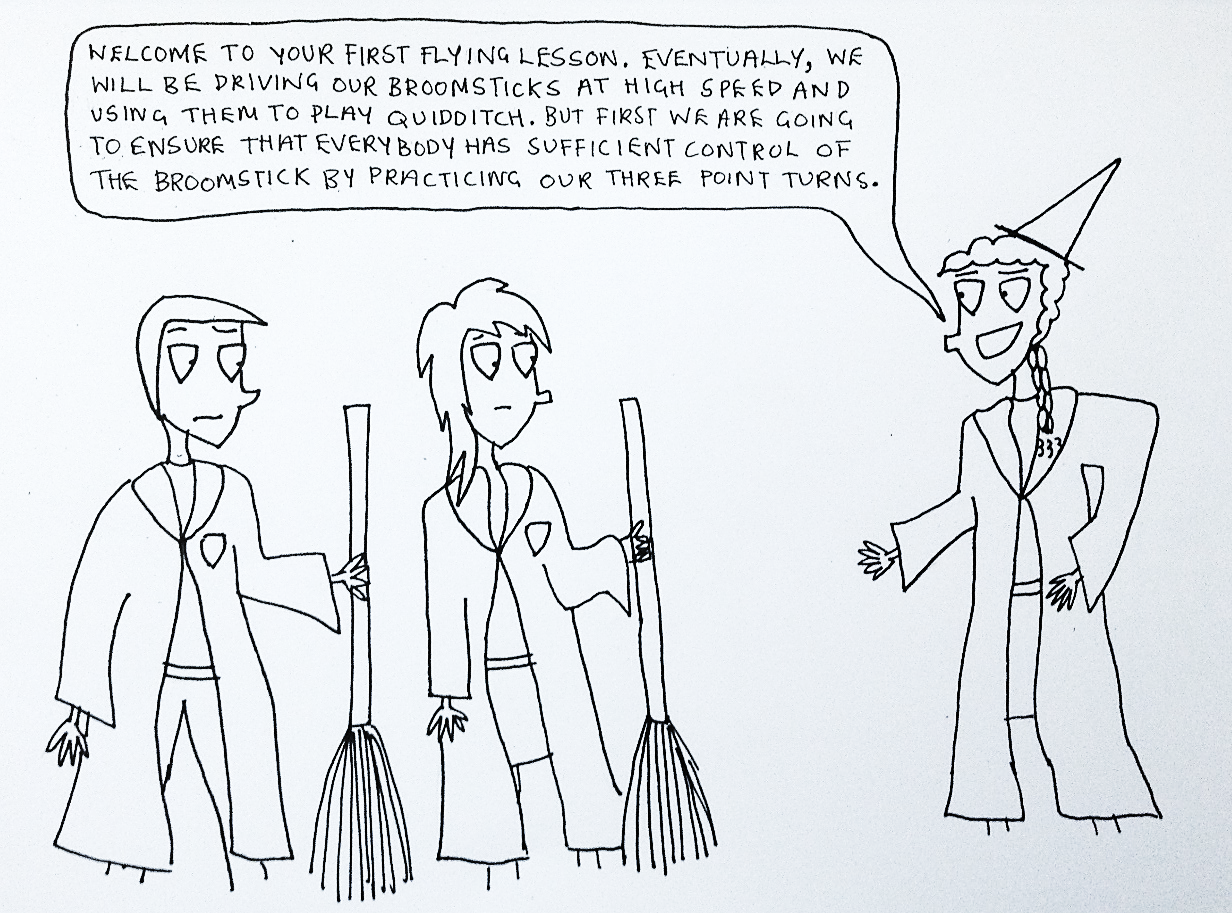
In fact, I’m pretty sure that I would be Hogwarts’ most hated teacher.

Although I am no longer able to use fictional books as a form of complete and utter escapism, I often use them to inform my real life.
It is comforting to know that, no matter how crazy or fantastical a book is, the struggles of its characters are always partially drawn from the author’s real life experiences.
If I am going through something difficult, sympathising with a character can make me feel less alone.
Or alternatively, if I am facing a difficult decision, observing how characters deal with their issues can sometimes give me an idea of how to move forward.
Books like The Very Hungry Caterpillar, We’re Going On A Bear Hunt and Harry Potter, for example, have provided me with some valuable advice on how to deal with my current quarter life identity crisis.

How To Increase Your Conversion Rates – I’d Tell You But I’m Not Really Sure Myself…
It’s Valentine’s weekend and, as we all know, nothing screams undying love like a post on conversion rates.
For the past couple of weeks, I have been doing some work experience at a digital marketing and web design agency.
Everyone who works at the agency is very smart and this is reflected in the sheer mass of technical terms and abbreviations that they use their everyday speech.
I therefore found the first few days of my placement quite confusing.
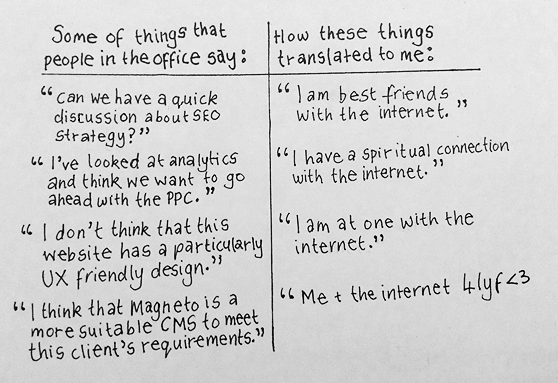
In the past, I have never been massively keen on abbreviations.
However, during my first week, I found myself using them much more frequently than I normally would in a slightly desperate attempt to fit in.

Luckily, the team are being very patient with me and I am gradually beginning to wrap my head around the technical slang.
One of the team’s favourite items of abbreviated lingo is ‘CRO’.
CRO stands for Conversion Rate Optimisation.
The conversion rate is the percentage of people that visit a website who also end up ‘converting’ – whether that be by buying the product or service that the site advertises or subscribing to a blog.
I initially found the whole idea of conversion rates a bit confusing but I have managed to reason it to myself by thinking about the dark side of the force.

Now, there are several optimisation techniques that you can implement in order to increase conversion rates.
However, I don’t have a clue what they are yet.
As far as I can make out, an important part of the process is to ensure that your site clearly communicates exactly what it is that it is offering a user in a way that convinces them to develop enough trust in you to convert.
I have therefore created an image which I feel effectively summarises exactly what my blog has to offer a potential subscriber.

I have tactically placed this image above the follow button on my blog’s homepage.
You may have noticed that I have incorporated the word ‘promise’ into the image.
This is because it is a commonly accepted fact of life that when a person uses the word ‘promise’, you can absolutely 100% trust them…
I am aware that the title of this post suggests that it is educational in nature.
However, I’m not sure if we’ve actually learnt anything aside from the fact that I can draw an alright picture of Darth Vader.
If you are looking for something that will genuinely help you to increase your conversion rates, I would suggest reading this article – although I can’t say for sure if it’s any good because, as we have already established, I don’t actually know a massive amount about online marketing.
The Main Thing I Learned From My Time As A Teenager Is That It Is Quite Hard Being A Teenager.
Writing was very important to me when I was a teenager.
During this period, my main creative niche was moody, self-obsessed fiction.
However, I would occasionally stray into other formats.
At one point, for example, I wrote a letter to JK Rowling explaining why I possessed the perfect personal attributes to be her assistant but I think it must have gotten lost in the post because I never received a reply.
I also wrote in a diary on a regular basis.
I was reading through one of my diaries the other day when I came across a series of entries which I feel prove that, even at the tender age of 14, I was in possession of the emotional maturity and sensitivity that all good writers need to create complex and compelling characters.

A mere day after meeting Luke, it became obvious I was contemplating taking the relationship to the next level:

However, five days later, I discovered something that would change my perception of Luke forever:

It was a devastating blow that altered my world view on a fundamental level:

I think that I was experiencing emotional anguish because I felt very anguished and emotional.
I listened to Britney Spears’ ‘Everytime’ quite a lot – and by ‘quite a lot’ I mean at a rate of around 30 times per day.
Thankfully, it wasn’t long before I learned to channel my angst into healthy outlets, such as physical activity:

My teenage years were quite a disorientating time for me.
I was very confused and unsure of myself.
Every little thing that happened to me seemed incredibly dramatic and the world frequently felt like it was on the verge of ending.
Before I was a teenager, life was very simple.
My mind operated in a very logical and consistent manner.
If I had a problem, for instance, I would go to my parents for advice.

Once I progressed into the teenage phase, I found that I was worrying about things great deal more than I had done as a child.
However, I also suddenly experienced an intense desire to keep my issues to myself.
As a result, I existed in a near-constant state of contradiction.
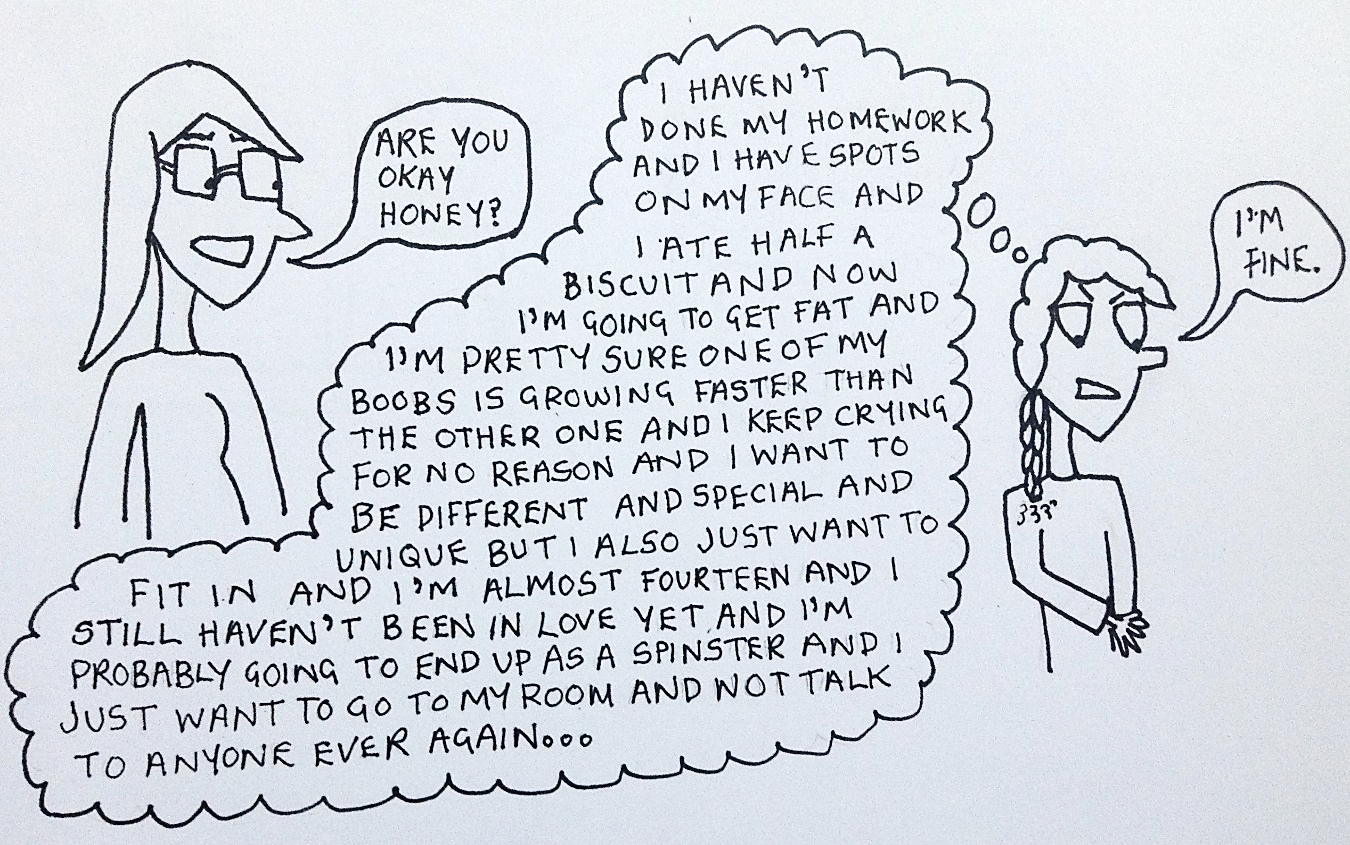
I no longer actively sought out my parents’ advice.
In fact, more often than not, I found myself vehemently disagreeing with them.
This was completely irrational.
I was fully aware of the fact that my parents possessed over 30 years more life experience than me but this failed to prevent me from operating under the assumption that everything they suggested was automatically and intrinsically wrong and not applicable to me in any aspect.
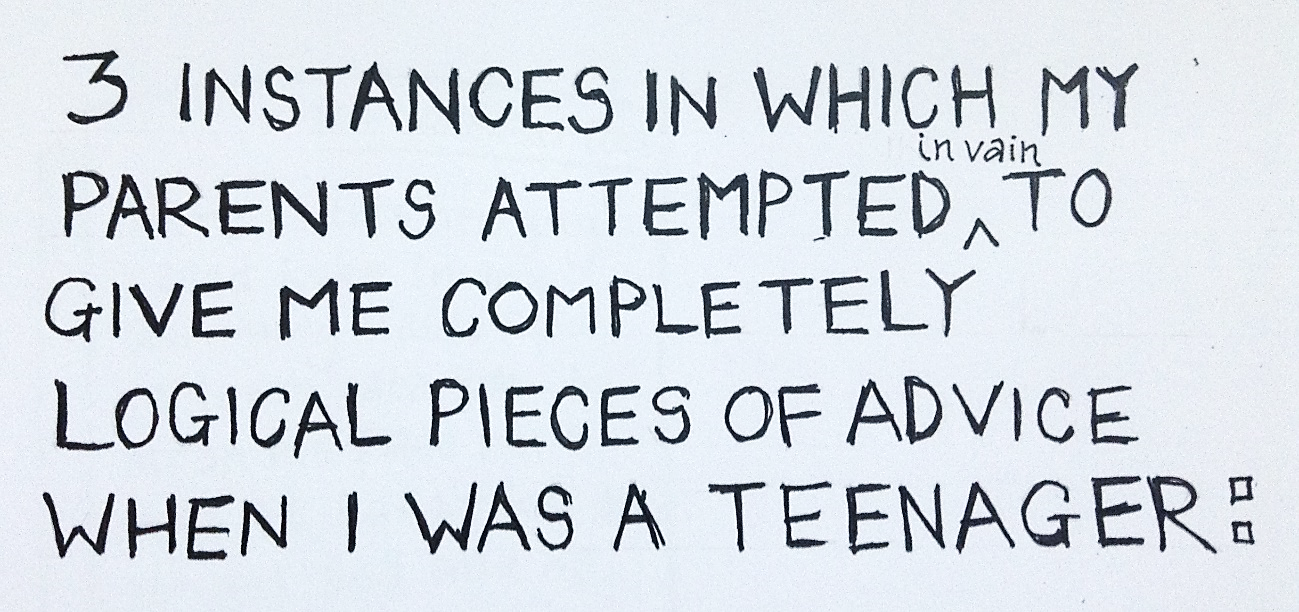


When I was a teenager, I felt like I was the only person who had ever experienced what it was like to be a teenager.
I suspect that this was one of the reasons why I had difficulty apprehending my parents’ advice.
I was unable visualise them as teenagers and therefore found it hard to believe that they could understand what I was going through.
I think I just presumed that they had skipped puberty altogether – as if, by some weird flux in in the space time continuum, they had spontaneously progressed directly from childhood to adulthood.

 Some Words That Say What I Think
